
• Home
  • Stories
  • Team
  • Archive
  • Contact
Menu

The PhDISH

PhD Insights into Science and Health
  • Home
  • Stories
  • Team
  • Archive
  • Contact

Surprise! All that road salt is contaminating our streams

by Guest User
 on February 17, 2015
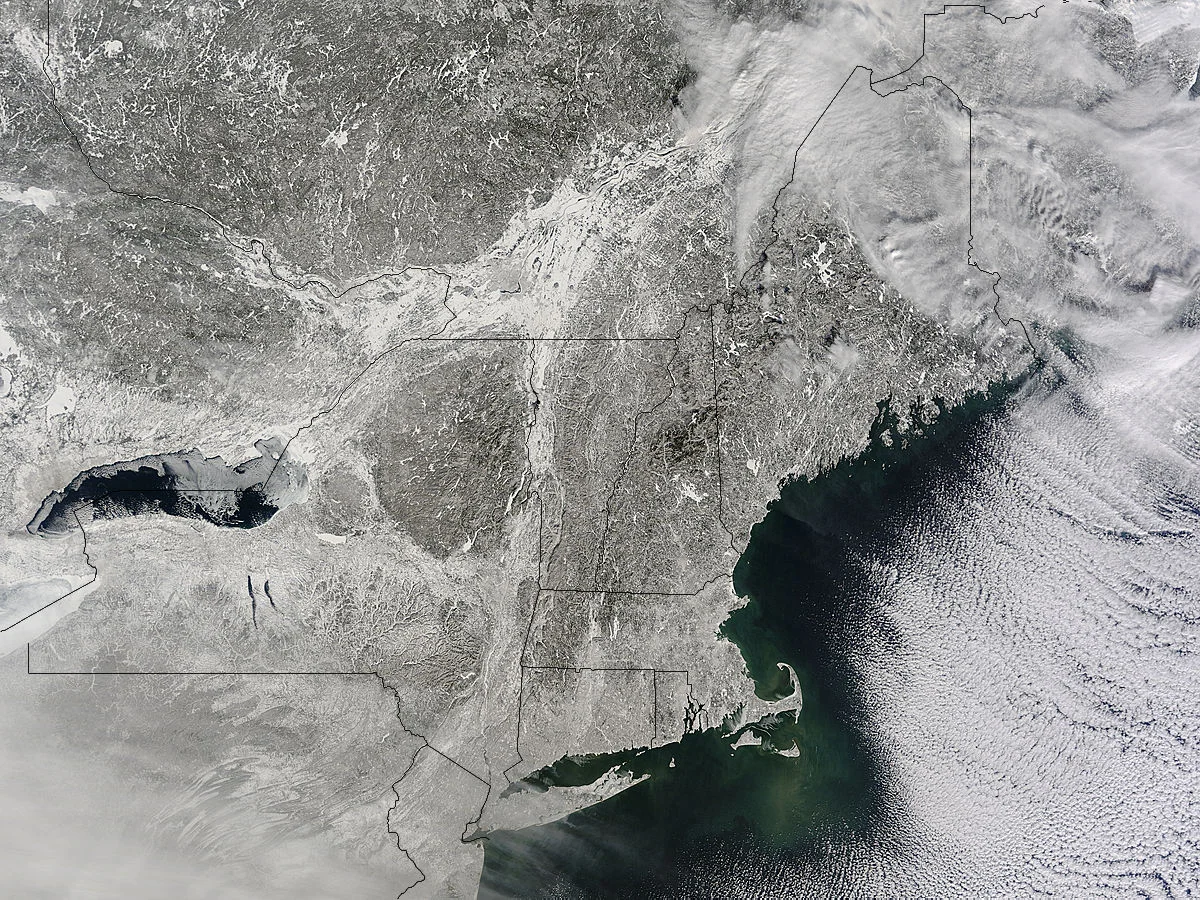
Photo: NASA

Photo: NASA

The Midwest and the Northeast are currently covered in snow. This will come to no surprise to anyone who lives in these areas and has a window. Those of us who live in these snow-covered areas are also familiar with the gift and the curse that is road salt. The US has been plowing and salting our roads since the 1940s to ensure we don't end up stranded on an Atlanta highway. Unsurprisingly, this generous use of road salt has had an environmental cost.

Researchers at the U.S. Geological Survey published a report where they monitored streams at sites across the US (but primarily located in the Midwest) and showed that:

  • Over the past half-century, the amount of salt in our streams has been increasing. Some sites exceed EPA criteria for chronic water quality.
  • Salt concentrations expectedly increase in the winter, especially if they have more snow.
  • Also salt concentrations are higher than normal during the summer. They believe the salt seeps into the groundwater during the winter and slowly escapes throughout the year.
  • Sites near urban areas have higher salt concentrations than rural ones.

A study done by Environment Canada in 2001 showed that aquatic organisms (again no surprise there) take the biggest direct ecological hit from the amount of salt we let into our waterways. In a USGS press release, the lead author of the study Steve Corsi said "Findings from this study emphasize the need to consider deicer management options that minimize the use of road salt while still maintaining safe conditions."

via USGS Newsroom

Tags Cool-Ish
← NY State Assemblyman attempts to ban most vaccinesThe Physics of Beer Tapping →
No results found

Recommended

Featured
New study sheds light on why the effectiveness of placebos is getting stronger
January 6, 2016
Michael Schreiber
New study sheds light on why the effectiveness of placebos is getting stronger
January 6, 2016
Michael Schreiber

While the strength of the placebo effect has been steady in the rest of the world, its magnitude has steadily strengthened in the United States.


Read more →
January 6, 2016
Michael Schreiber
Above the fruited plain: GMOs in perspective
July 27, 2015
Deepti Mathur
Above the fruited plain: GMOs in perspective
July 27, 2015
Deepti Mathur

In this post, Deepti Mathur and Amy Jobe tackle the nuances of the GMO debate.

Read more →
July 27, 2015
Deepti Mathur
Featured
What's the Dish on Global Warming?
August 23, 2014
Deepti Mathur
What's the Dish on Global Warming?
August 23, 2014
Deepti Mathur

We’ve all heard about the disappearing polar ice caps, rising sea levels, and emerging crazy weather patterns around us. But discovering these environmental changes didn’t happen overnight – lots of careful research goes into the field of climate science, and there’s more work being done every day to explore details about phenomena triggered by global warming. July has been particularly abuzz with articles in this field; below, I’ve summarized a few of the papers and news items from the summer.

Read more →
August 23, 2014
Deepti Mathur

Latest

Featured
Understanding ‘understanding’: What We Understand is Influenced by How We Understand
Siddhant Iyer
Understanding ‘understanding’: What We Understand is Influenced by How We Understand
Siddhant Iyer

The history of science is full of examples of discovery, both intentional and accidental. But how do scientists study subject matter incapable of being explained by simple models? And additionally, if science can produce favorable results (say, in the clinic), to what extent does it matter whether or not the results can be fully explained? Here, Siddhant Iyer outlines the ways in which scientists may study as-of-yet unexplained phenomena and argues for a framework involving the use of complex models while also acknowledging limitations.

Read more →
Siddhant Iyer
The Mysteries of REM Sleep
Xinyue Chen
The Mysteries of REM Sleep
Xinyue Chen

REM sleep is widely known to be essential for mood, memory, and learning. But why is it needed in the first place? Here, Xinyue Chen details her own experiences with sleep deprivation and discusses the four key features of REM sleep in humans, explaining how a full understanding of such a critical and well known biological process remains elusive.

Read more →
Xinyue Chen
Healthcare in the Metaverse
Khushbu Kabra
Healthcare in the Metaverse
Khushbu Kabra

The metaverse is a concept not typically associated with the healthcare industry. However, healthcare companies are quickly beginning to invest in this technology, promising virtual hospitals and pharmacies among other benefits in the not-too-distant future. Here, Khushbu Kabra discuses the potential role the metaverse will play in future healthcare, as well as the current state of the technology and concerns that will need to be addressed.

Read more →
Khushbu Kabra
Animal-Assisted Interventions
Alec Kittredge
Animal-Assisted Interventions
Alec Kittredge

Exposure to dogs and other animals can help to reduce stress and improve patient outcomes in hospital settings. Here, dog-owner Alec Kittredge explains how animal-assisted interventions have been used and studied for the past several decades.

Read more →
Alec Kittredge

Contributors

  • Adrien Stanley (2)
  • Alec Kittredge (4)
  • Amy Jobe (8)
  • Andres Villegas (1)
  • Ashlea Morgan (1)
  • Ben Sally (2)
  • Daniel Duzdevich (1)
  • Darshini Mahadevia (1)
  • David Kazadi (2)
  • Deepti Mathur (11)
  • Elizabeth Stivison (2)
  • Ethan McCurdy (3)
  • Franklin Garcia (1)
  • Grace Herod (2)
  • Guest User (8)
  • Ishani Ganguly (1)
  • James Lohner (5)
  • Jordan Kesner (1)
  • Karin Isaev (1)
  • Kathryn Birkenbach (1)
  • Khushbu Kabra (2)
  • Lara Boyle (4)
  • Ling Ye (1)
  • Max Cabaj (1)
  • Michael Schreiber (14)
  • Nicholas Giangreco (2)
  • Nick Bulthuis (1)
  • Paige Helmer (2)
  • Patricia Cooney (1)
  • Sarah Kleinstein (1)
  • Sarah Puhr (3)
  • Sergej Borowik (1)
  • Seth Robey (3)
  • Siddhant Iyer (1)
  • Tim Bonvallet (1)
  • Victoria Allen (1)
  • Xinyue Chen (2)
  • Xinyue Chen and Claire Everett (1)

© 2021 PhDish. All Rights Reserved.