
• Home
  • Stories
  • Team
  • Archive
  • Contact
Menu

The PhDISH

PhD Insights into Science and Health
  • Home
  • Stories
  • Team
  • Archive
  • Contact

The Fate of Fat

by David Kazadi
 on January 5, 2015
Photo: Flickr

Photo: Flickr

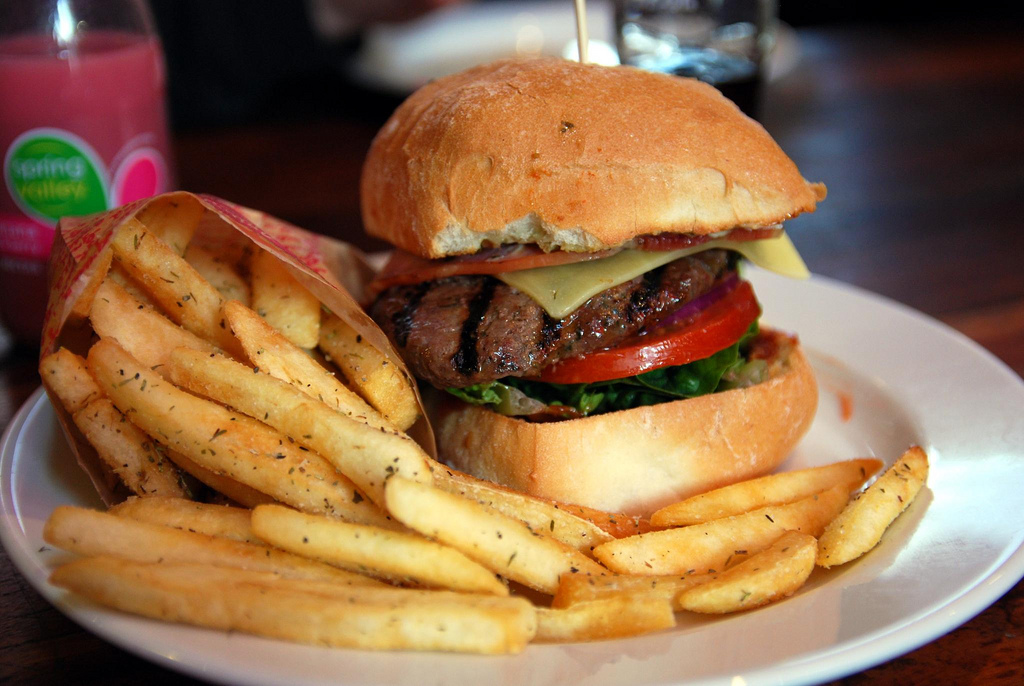
With each January 1st comes the ritual of the “New Year Resolution:” the commitment, more or less strong, to modify one’s behavior in the incipient year, typically positively, and oftentimes to better oneself. The practice is not new: people as far back as the ancient Babylonians had their own version of New Year Resolutions. These days, Americans regularly rank weight loss among their top objectives, which doesn’t seem too surprising if you consider the rates of overweight/obesity, and the socially-sanctioned, year-end national exercise-in-gluttony that starts around the fourth Thursday in November.

Photo: Wikipedia

Photo: Wikipedia

When we consume too much food — in other words, when the food intake exceeds our metabolic energy needs — the unused carbohydrates and proteins are converted to triacylglycerol (dietary fats simply get lipolyzed/esterified). It seems likely that evolutionary pressures have favored these neutral fats as a major energy reservoir for two main reasons. (1) Fatty acids are more reduced than carbohydrates and proteins: complete oxidation from fatty acids yields about 9 kcal/g whereas that from carbohydrates and proteins yields about 4 kcal/g. (2) Another reason is that triacylglycerol (also called triglycerides) are anhydrous: the more polar carbohydrates and proteins are more highly hydrated than the less polar triglycerides. For instance, 1 g of glycogen (a polymer of glucose, a common and simple carbohydrate) binds about 2 g of water. As a consequence, 1 g of anhydrous fat stores about 6 times as much energy as 1 g of glycogen!

0
0
1
28
165
Columbia University
1
1
192
14.0


Normal
0


false
false
false

EN-US
JA
X-NONE


 <w:LatentStyles DefLockedState="false" DefUnhideWhenUsed="true"
DefSemiHidden="true" DefQFormat="fals…

Fatty acids play several key roles in metabolism. Oleic, palmitic, and linoleic acids are the three most common fatty acids used for energy storage in adipocytes in the form of triglycerides. Photo: Wikipedia

For most people, losing weight actually means shedding that very efficient energy storage (or at least some portion of it), while preserving muscle mass. But where does that fat actually go? Australian scientists Andrew Brown and Ruben Meerman posed that question to a sample of physicians, dietitians, and personal trainers. To their dismay, most of these professionals answered that it was transformed into energy/heat. This would appear to violate the fundamental law of conservation of mass credited to 18th century French chemist Antoine Lavoisier.

The Aussie duo set out to find the answer for themselves. They wanted to account for each atom found in a typical triglyceride (with formula C55H104O6) as it is oxidized into carbon dioxide (CO2), water (H2O), and energy, summarized in the following reaction (similar to that for the complete oxidation of glucose that perhaps more people are familiar with):

C55H104O6 + 78 O2 → 55 CO2 + 52 H2O + energy

We can fairly easily derive the amounts of O2 required to completely oxidize 1 mole of this average triglyceride, as well as the amounts of CO2 and of H2O produced in the process. What the authors proposed to elucidate here was the proportion of the triglyceride that contributes to carbon dioxide and to water. In other words, if you have 10 kg of fat to oxidize, you know that you will need to inhale around 29 kg of O2, and that you will produce roughly 28 kg of CO2 and 11 kg of H2O (roughly 11 L of water); but how much of that 10 kg-mass actually goes into the carbon dioxide, and how much into the water? Meerman and Brown delved into the literature, and came across experiments performed by Lifson and colleagues in the late 1940’s, tracing isotopic oxygen (O 18) to show that molecular oxygen becomes distributed in a 2:1 ratio between CO2 and H2O via the carbonic acid buffer reaction:

CO2 + H2O ⇌ H2CO3

In other words, CO2 and H2O will share the 6 oxygen atoms from the triglyceride that helped give rise to them in a 2:1 fashion, with 4 O atoms going to carbon dioxide, and 2 to water. Using the atomic mass (in dalton), we can now compute the percentage of mass of this average triglyceride that will be contributing to carbon dioxide formation, and the percentage that goes into water formation.

Of the average triglyceride C55H104O6 (or 861 Da),
55 C (or 661 Da) + 4 O (or 64 Da) contribute to 55 CO2: ((661+64)/861) x 100 = 84.2%
and
104 H (or 104Da) + 2 O (or 32Da) contribute to 52 H2O: ((104+32)/861) x 100 = 15.8%

So about 84% of the triacylglycerol goes into carbon dioxide, and roughly 16% goes into water. This means that most of the fat mass is lost through exhaling carbon dioxide! Beyond this nifty calculation, what does this actually mean? It remains to be seen whether reinforcing these concepts in “secondary school science curriculums and university biochemistry courses,” as the authors advocate, will do much to help people shed unwanted weight. I posed this question to a friend of mine who knows a lot more about fat than I do, and he was not much impressed either: “Don't really see how this could aid in weight loss. Still comes down to how many calories you eat vs how many you expend,” said Yann Ravussin, PhD. Indeed. But at the very least, this should reaffirm to people, lay and professional, the centrality to weight loss of proper respiration during exercise.

References:

Berg, J., Tymoczko, J. L., Stryer, L. Biochemistry, Fifth Edition; 2001, pp 601-603.

Lifson N, Gordon GB, Visscher MB, Nier AO. The fate of utilized molecular oxygen and the source of the oxygen of respiratory carbon dioxide, studied with the aid of heavy oxygen. J Biol Chem 1949;180:803-11.

Meerman, R., and Brown, A. When somebody loses weight, where does the fat go? BMJ 2014;349:g7257

Edition Volume 2 Issue 1 Tags Centri-feud, David, fat, metabolism
← Regenerative medicine: exciting, but still in its infancyThe Leaning Ivory Tower →
No results found

Recommended

Featured
New study sheds light on why the effectiveness of placebos is getting stronger
January 6, 2016
Michael Schreiber
New study sheds light on why the effectiveness of placebos is getting stronger
January 6, 2016
Michael Schreiber

While the strength of the placebo effect has been steady in the rest of the world, its magnitude has steadily strengthened in the United States.


Read more →
January 6, 2016
Michael Schreiber
Above the fruited plain: GMOs in perspective
July 27, 2015
Deepti Mathur
Above the fruited plain: GMOs in perspective
July 27, 2015
Deepti Mathur

In this post, Deepti Mathur and Amy Jobe tackle the nuances of the GMO debate.

Read more →
July 27, 2015
Deepti Mathur
Featured
What's the Dish on Global Warming?
August 23, 2014
Deepti Mathur
What's the Dish on Global Warming?
August 23, 2014
Deepti Mathur

We’ve all heard about the disappearing polar ice caps, rising sea levels, and emerging crazy weather patterns around us. But discovering these environmental changes didn’t happen overnight – lots of careful research goes into the field of climate science, and there’s more work being done every day to explore details about phenomena triggered by global warming. July has been particularly abuzz with articles in this field; below, I’ve summarized a few of the papers and news items from the summer.

Read more →
August 23, 2014
Deepti Mathur

Latest

Featured
Understanding ‘understanding’: What We Understand is Influenced by How We Understand
Siddhant Iyer
Understanding ‘understanding’: What We Understand is Influenced by How We Understand
Siddhant Iyer

The history of science is full of examples of discovery, both intentional and accidental. But how do scientists study subject matter incapable of being explained by simple models? And additionally, if science can produce favorable results (say, in the clinic), to what extent does it matter whether or not the results can be fully explained? Here, Siddhant Iyer outlines the ways in which scientists may study as-of-yet unexplained phenomena and argues for a framework involving the use of complex models while also acknowledging limitations.

Read more →
Siddhant Iyer
The Mysteries of REM Sleep
Xinyue Chen
The Mysteries of REM Sleep
Xinyue Chen

REM sleep is widely known to be essential for mood, memory, and learning. But why is it needed in the first place? Here, Xinyue Chen details her own experiences with sleep deprivation and discusses the four key features of REM sleep in humans, explaining how a full understanding of such a critical and well known biological process remains elusive.

Read more →
Xinyue Chen
Healthcare in the Metaverse
Khushbu Kabra
Healthcare in the Metaverse
Khushbu Kabra

The metaverse is a concept not typically associated with the healthcare industry. However, healthcare companies are quickly beginning to invest in this technology, promising virtual hospitals and pharmacies among other benefits in the not-too-distant future. Here, Khushbu Kabra discuses the potential role the metaverse will play in future healthcare, as well as the current state of the technology and concerns that will need to be addressed.

Read more →
Khushbu Kabra
Animal-Assisted Interventions
Alec Kittredge
Animal-Assisted Interventions
Alec Kittredge

Exposure to dogs and other animals can help to reduce stress and improve patient outcomes in hospital settings. Here, dog-owner Alec Kittredge explains how animal-assisted interventions have been used and studied for the past several decades.

Read more →
Alec Kittredge

Contributors

  • Adrien Stanley (2)
  • Alec Kittredge (4)
  • Amy Jobe (8)
  • Andres Villegas (1)
  • Ashlea Morgan (1)
  • Ben Sally (2)
  • Daniel Duzdevich (1)
  • Darshini Mahadevia (1)
  • David Kazadi (2)
  • Deepti Mathur (11)
  • Elizabeth Stivison (2)
  • Ethan McCurdy (3)
  • Franklin Garcia (1)
  • Grace Herod (2)
  • Guest User (8)
  • Ishani Ganguly (1)
  • James Lohner (5)
  • Jordan Kesner (1)
  • Karin Isaev (1)
  • Kathryn Birkenbach (1)
  • Khushbu Kabra (2)
  • Lara Boyle (4)
  • Ling Ye (1)
  • Max Cabaj (1)
  • Michael Schreiber (14)
  • Nicholas Giangreco (2)
  • Nick Bulthuis (1)
  • Paige Helmer (2)
  • Patricia Cooney (1)
  • Sarah Kleinstein (1)
  • Sarah Puhr (3)
  • Sergej Borowik (1)
  • Seth Robey (3)
  • Siddhant Iyer (1)
  • Tim Bonvallet (1)
  • Victoria Allen (1)
  • Xinyue Chen (2)
  • Xinyue Chen and Claire Everett (1)

We think you'd also like these:

Featured
Understanding ‘understanding’: What We Understand is Influenced by How We Understand
July 16, 2024
Siddhant Iyer
Understanding ‘understanding’: What We Understand is Influenced by How We Understand
July 16, 2024
Siddhant Iyer

The history of science is full of examples of discovery, both intentional and accidental. But how do scientists study subject matter incapable of being explained by simple models? And additionally, if science can produce favorable results (say, in the clinic), to what extent does it matter whether or not the results can be fully explained? Here, Siddhant Iyer outlines the ways in which scientists may study as-of-yet unexplained phenomena and argues for a framework involving the use of complex models while also acknowledging limitations.

Read more →
July 16, 2024
Siddhant Iyer
The Mysteries of REM Sleep
June 23, 2023
Xinyue Chen
The Mysteries of REM Sleep
June 23, 2023
Xinyue Chen

REM sleep is widely known to be essential for mood, memory, and learning. But why is it needed in the first place? Here, Xinyue Chen details her own experiences with sleep deprivation and discusses the four key features of REM sleep in humans, explaining how a full understanding of such a critical and well known biological process remains elusive.

Read more →
June 23, 2023
Xinyue Chen
Healthcare in the Metaverse
January 8, 2023
Khushbu Kabra
Healthcare in the Metaverse
January 8, 2023
Khushbu Kabra

The metaverse is a concept not typically associated with the healthcare industry. However, healthcare companies are quickly beginning to invest in this technology, promising virtual hospitals and pharmacies among other benefits in the not-too-distant future. Here, Khushbu Kabra discuses the potential role the metaverse will play in future healthcare, as well as the current state of the technology and concerns that will need to be addressed.

Read more →
January 8, 2023
Khushbu Kabra
Animal-Assisted Interventions
December 8, 2022
Alec Kittredge
Animal-Assisted Interventions
December 8, 2022
Alec Kittredge

Exposure to dogs and other animals can help to reduce stress and improve patient outcomes in hospital settings. Here, dog-owner Alec Kittredge explains how animal-assisted interventions have been used and studied for the past several decades.

Read more →
December 8, 2022
Alec Kittredge

© 2021 PhDish. All Rights Reserved.