
• Home
  • Stories
  • Team
  • Archive
  • Contact
Menu

The PhDISH

PhD Insights into Science and Health
  • Home
  • Stories
  • Team
  • Archive
  • Contact

Genetically Modified Children

by Guest User
 on May 4, 2015
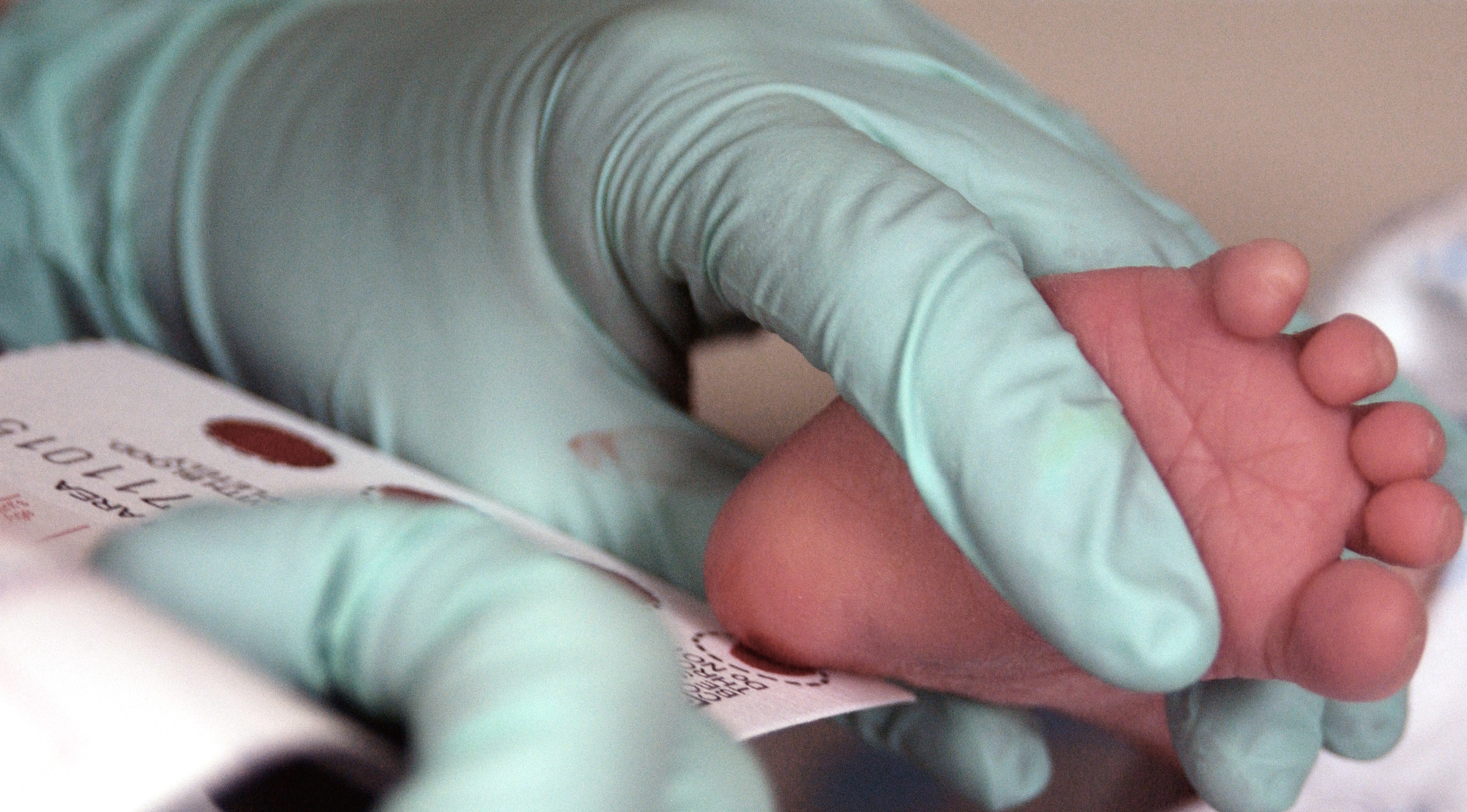
Testing a newborn for phenylketonuria. Photo: Wikipedia

Testing a newborn for phenylketonuria. Photo: Wikipedia

Last month, scientists from the Sun Yat-sen University in Guangzhou published the first report of genetically engineering (inviable) human embryos using CRISPR/Cas9 (see our article “Breakthrough in Breaking DNA” for a primer on the technology). Technologically speaking, this paper is pretty boring. CRISPR/Cas9 has been used in organisms up and down the tree of life. The only thing that sets it apart is the type of cell they use, human embryos. Us. 

Prior to this report’s publication, prominent biologists had already penned letters in Science and Nature calling on the global scientific community to stop all human germline use of CRISPR/Cas9 until we can resolve its shortcomings. The NIH agreed and said they would not fund this sort of research. There are two main arguments as to why some want a moratorium on human gene editing:

  • The technology is powerful, but too dangerous at the moment. The original report’s scientists agree that thorough research is “sorely needed” before birthing any edited babies.
  • Editing the human genome creates ethical dilemmas that we haven’t sufficiently addressed. 

It’s only a matter of time before this technology is ironed out. Combining genes from different organisms, for example, was once a hotly debated technology like CRISPR/Cas9, but is now a staple in undergraduate biology courses. But before human gene editing is close to being perfected, we need to figure out when it would be acceptable, if at all, for us to use it in embryos that will eventually become full-fledged human beings.

According to a 2014 survey, 50% of people find genetically modified babies acceptable if it’s done to “reduce the risk of serious diseases.” However, that number drops to only 15% if it’s done to make the baby more intelligent. In 2004 (before CRISPR/Cas9), 61% of Americans were in favor of selectively choosing embryos that are free of genetic diseases. This technology can also be used to selectively choose the sex of a child. When asked if “social sex selection” were acceptable, 57% said no.

Saving a child from a life of a known genetic disease seems reasonably acceptable. But genetically imposing our idea of what is good for them is deeply unsettling. The former brings a child’s quality of life back to the human average, saving them from chronic suffering or an unnecessarily short life. The latter takes the express train straight to how we define nature and ourselves as humans.

Raising a child requires a balance between accepting love and transforming love. Accepting love is when parents accept their children for who they are. Transforming love tries to ensure the well-being of children by nurturing and improving them. Together, these two types of love promote healthy parent-child relationships. When transforming love takes over too strongly, we get tiger moms and helicopter parents.

David Baltimore. One of the leading scientists calling for a moratorium on human germline gene editing. Photo: Wikipedia

David Baltimore. One of the leading scientists calling for a moratorium on human germline gene editing. Photo: Wikipedia

One fear of genetic engineering is that it is the extreme case of transforming love. Overzealous parents would impose irreversible traits on their child at the most basic level, subverting her autonomy as a human being. Conversely, a child of a tiger mom may have her social identity heavily molded during her childhood, but would still have an opportunity, however small, to rebel, flee, or choose her own path.

However, some argue that children don’t have autonomy in choosing their genomes anyway. Parents already have enormous sway in what kind of children they have. They have already made a choice about their mate, either consciously or not, to increase their child’s odds in the genetic lottery. Sperm donation recipients can screen for physical characteristics and education level of their child's father. And it's legal to choose the sex of your child through a couple of different methods.

According to NYU philosopher S. Matthew Liao, there is an important distinction to make. Choosing a mate, sperm donor, or child’s sex using today’s established technology is a matter of selection. CRISPR/Cas9 differs in that it modifies an embryo. A child born of sperm or embryo selection cannot argue that the selection changed who they would have been for the worse. They would not have existed if their parents chose differently. Conversely, a child born of a genetic modification could argue that their human identity has been harmed because of the choice their parents made to engineer their genome in an irreversible way.

This is only the tip of the ethical iceberg that awaits us. Modifying human genomes before birth directly questions what it means to be a human being (as opposed to just animals roaming about). CRISPR/Cas9 is here to stay and will inevitably become ingrained in human society. An anonymous source has told Nature that other groups are already pursuing human embryo editing. (It is already deeply established in biomedical research after just 3 years). Many of us would agree that once the technology is optimized, it would be an extremely powerful tool to thwart suffering and pain stemming from genetic diseases. But we need to start thoroughly discussing the ethical limitations we place on CRISPR/Cas9 before we simply let fear of the unknown suffocate one of the greatest innovations of our century.

Edition Volume 2 Issue 5 Tags Tomorrow's Science Today, genetics, CRISPR, Andrew
← Weather modification is here, and it has been for decadesWhy do we have allergies? →
No results found

Recommended

Featured
New study sheds light on why the effectiveness of placebos is getting stronger
January 6, 2016
Michael Schreiber
New study sheds light on why the effectiveness of placebos is getting stronger
January 6, 2016
Michael Schreiber

While the strength of the placebo effect has been steady in the rest of the world, its magnitude has steadily strengthened in the United States.


Read more →
January 6, 2016
Michael Schreiber
Above the fruited plain: GMOs in perspective
July 27, 2015
Deepti Mathur
Above the fruited plain: GMOs in perspective
July 27, 2015
Deepti Mathur

In this post, Deepti Mathur and Amy Jobe tackle the nuances of the GMO debate.

Read more →
July 27, 2015
Deepti Mathur
Featured
What's the Dish on Global Warming?
August 23, 2014
Deepti Mathur
What's the Dish on Global Warming?
August 23, 2014
Deepti Mathur

We’ve all heard about the disappearing polar ice caps, rising sea levels, and emerging crazy weather patterns around us. But discovering these environmental changes didn’t happen overnight – lots of careful research goes into the field of climate science, and there’s more work being done every day to explore details about phenomena triggered by global warming. July has been particularly abuzz with articles in this field; below, I’ve summarized a few of the papers and news items from the summer.

Read more →
August 23, 2014
Deepti Mathur

Latest

Featured
Understanding ‘understanding’: What We Understand is Influenced by How We Understand
Siddhant Iyer
Understanding ‘understanding’: What We Understand is Influenced by How We Understand
Siddhant Iyer

The history of science is full of examples of discovery, both intentional and accidental. But how do scientists study subject matter incapable of being explained by simple models? And additionally, if science can produce favorable results (say, in the clinic), to what extent does it matter whether or not the results can be fully explained? Here, Siddhant Iyer outlines the ways in which scientists may study as-of-yet unexplained phenomena and argues for a framework involving the use of complex models while also acknowledging limitations.

Read more →
Siddhant Iyer
The Mysteries of REM Sleep
Xinyue Chen
The Mysteries of REM Sleep
Xinyue Chen

REM sleep is widely known to be essential for mood, memory, and learning. But why is it needed in the first place? Here, Xinyue Chen details her own experiences with sleep deprivation and discusses the four key features of REM sleep in humans, explaining how a full understanding of such a critical and well known biological process remains elusive.

Read more →
Xinyue Chen
Healthcare in the Metaverse
Khushbu Kabra
Healthcare in the Metaverse
Khushbu Kabra

The metaverse is a concept not typically associated with the healthcare industry. However, healthcare companies are quickly beginning to invest in this technology, promising virtual hospitals and pharmacies among other benefits in the not-too-distant future. Here, Khushbu Kabra discuses the potential role the metaverse will play in future healthcare, as well as the current state of the technology and concerns that will need to be addressed.

Read more →
Khushbu Kabra
Animal-Assisted Interventions
Alec Kittredge
Animal-Assisted Interventions
Alec Kittredge

Exposure to dogs and other animals can help to reduce stress and improve patient outcomes in hospital settings. Here, dog-owner Alec Kittredge explains how animal-assisted interventions have been used and studied for the past several decades.

Read more →
Alec Kittredge

Contributors

  • Adrien Stanley (2)
  • Alec Kittredge (4)
  • Amy Jobe (8)
  • Andres Villegas (1)
  • Ashlea Morgan (1)
  • Ben Sally (2)
  • Daniel Duzdevich (1)
  • Darshini Mahadevia (1)
  • David Kazadi (2)
  • Deepti Mathur (11)
  • Elizabeth Stivison (2)
  • Ethan McCurdy (3)
  • Franklin Garcia (1)
  • Grace Herod (2)
  • Guest User (8)
  • Ishani Ganguly (1)
  • James Lohner (5)
  • Jordan Kesner (1)
  • Karin Isaev (1)
  • Kathryn Birkenbach (1)
  • Khushbu Kabra (2)
  • Lara Boyle (4)
  • Ling Ye (1)
  • Max Cabaj (1)
  • Michael Schreiber (14)
  • Nicholas Giangreco (2)
  • Nick Bulthuis (1)
  • Paige Helmer (2)
  • Patricia Cooney (1)
  • Sarah Kleinstein (1)
  • Sarah Puhr (3)
  • Sergej Borowik (1)
  • Seth Robey (3)
  • Siddhant Iyer (1)
  • Tim Bonvallet (1)
  • Victoria Allen (1)
  • Xinyue Chen (2)
  • Xinyue Chen and Claire Everett (1)

We think you'd also like these:

Featured
Understanding ‘understanding’: What We Understand is Influenced by How We Understand
July 16, 2024
Siddhant Iyer
Understanding ‘understanding’: What We Understand is Influenced by How We Understand
July 16, 2024
Siddhant Iyer

The history of science is full of examples of discovery, both intentional and accidental. But how do scientists study subject matter incapable of being explained by simple models? And additionally, if science can produce favorable results (say, in the clinic), to what extent does it matter whether or not the results can be fully explained? Here, Siddhant Iyer outlines the ways in which scientists may study as-of-yet unexplained phenomena and argues for a framework involving the use of complex models while also acknowledging limitations.

Read more →
July 16, 2024
Siddhant Iyer
The Mysteries of REM Sleep
June 23, 2023
Xinyue Chen
The Mysteries of REM Sleep
June 23, 2023
Xinyue Chen

REM sleep is widely known to be essential for mood, memory, and learning. But why is it needed in the first place? Here, Xinyue Chen details her own experiences with sleep deprivation and discusses the four key features of REM sleep in humans, explaining how a full understanding of such a critical and well known biological process remains elusive.

Read more →
June 23, 2023
Xinyue Chen
Healthcare in the Metaverse
January 8, 2023
Khushbu Kabra
Healthcare in the Metaverse
January 8, 2023
Khushbu Kabra

The metaverse is a concept not typically associated with the healthcare industry. However, healthcare companies are quickly beginning to invest in this technology, promising virtual hospitals and pharmacies among other benefits in the not-too-distant future. Here, Khushbu Kabra discuses the potential role the metaverse will play in future healthcare, as well as the current state of the technology and concerns that will need to be addressed.

Read more →
January 8, 2023
Khushbu Kabra
Animal-Assisted Interventions
December 8, 2022
Alec Kittredge
Animal-Assisted Interventions
December 8, 2022
Alec Kittredge

Exposure to dogs and other animals can help to reduce stress and improve patient outcomes in hospital settings. Here, dog-owner Alec Kittredge explains how animal-assisted interventions have been used and studied for the past several decades.

Read more →
December 8, 2022
Alec Kittredge

© 2021 PhDish. All Rights Reserved.