
• Home
  • Stories
  • Team
  • Archive
  • Contact
Menu

The PhDISH

PhD Insights into Science and Health
  • Home
  • Stories
  • Team
  • Archive
  • Contact

Curing humans of HIV: Is vectored immunoprophylaxis the answer?

by Michael Schreiber
 on July 20, 2014

In the United States, HIV/AIDS has largely been rendered a chronic health condition by the development of highly active anti-retroviral therapy (HAART), a combination of anti-HIV medications with a thoroughly proven track record. However, HIV/AIDS is still a condition that weighs heavily on the minds of at-risk populations in the United States, and it remains a scourge in less developed countries, where it is still a leading cause of death. Notably, last year, President Obama directed an additional $100 million be spent researching a cure for HIV/AIDS. However, a cure has been very difficult to obtain, even considered a quixotic quest by many infectious disease researchers who see vaccination and management of HIV/AIDS as a chronic condition as more viable public health options for addressing the AIDS crisis.

Recently, as reported in The New York Times, doctors proclaimed a child cured of HIV after initiating aggressive treatment with antiretroviral drugs within a day of birth. However, discovery of actively replicating HIV in this child three years after the unusually aggressive treatment tempered the optimism of the original report. While extreme approaches such as the therapy attempted with this child have yet to be fully tested, and novel public health approaches such as pre-exposure prophylaxis with the drug Truvada are in the early stages of adoption, a true cure for HIV remains elusive.

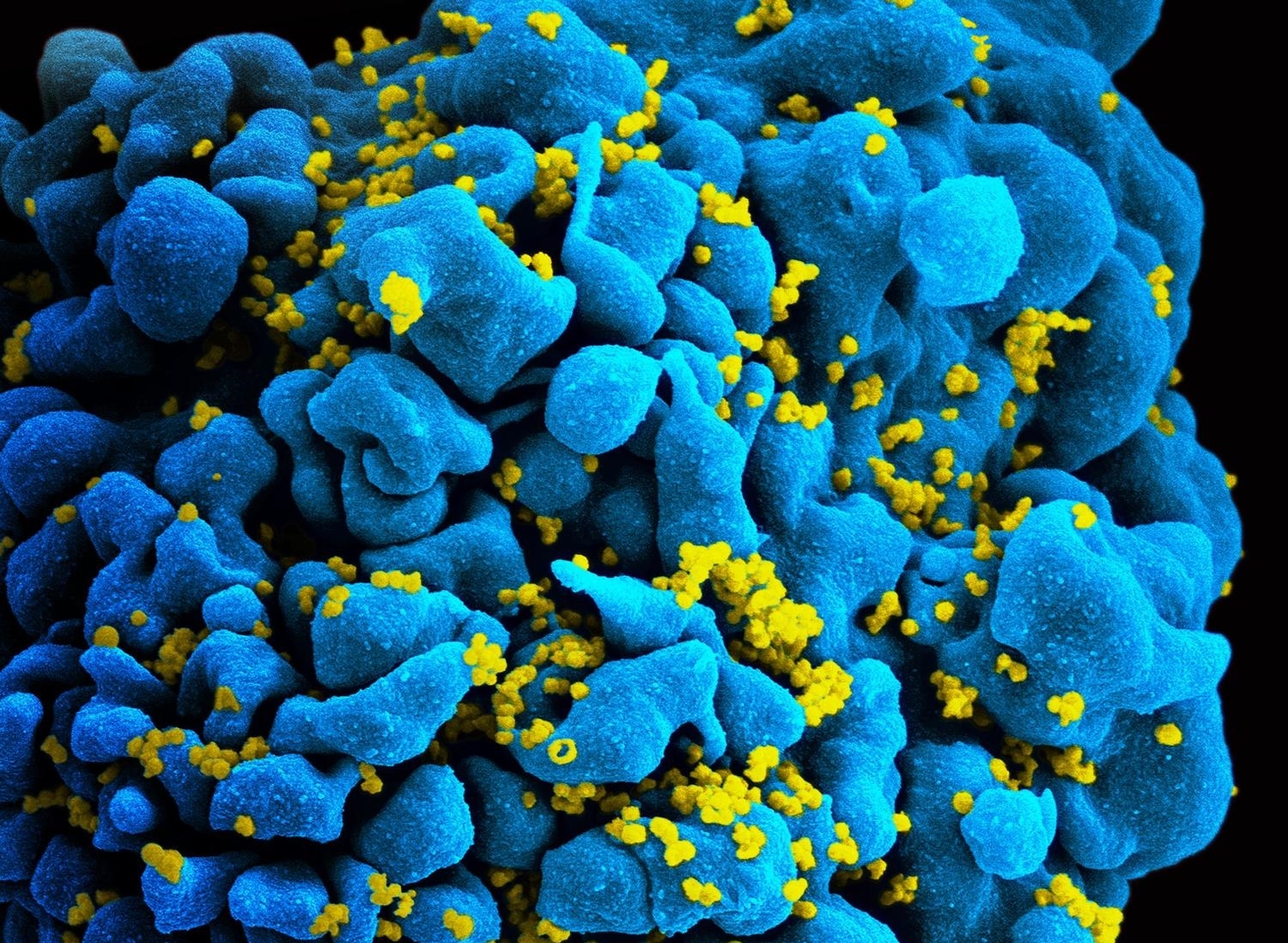
The problems inherent to curing HIV are legion; the virus integrates its genetic information into host cells and forms hidden pockets of infection that drugs and other therapies have difficulty reaching, called reservoirs. These reservoirs are infected by the virus but do not actively replicate it under normal conditions, effectively hiding the infected cells from immune surveillance and targeted therapies. Even if antiretroviral drugs are able to eliminate all of the actively replicating virus at a given time, the viral reservoirs can reactivate, effectively reinfecting the otherwise "cured" individual. Despite 30 years of research on HIV replication, scientists still have a poor understanding of where viral reservoirs are located and how to go about eliminating them. Dr. Anthony Fauci, director of the National Institute of Allergy and Infectious Diseases and a prominant AIDS researcher, has gone on record calling HIV reactivation from viral reservoirs "a very mysterious situation."

Fortunately, despite the complications presented by viral reservoirs,  a number of new strategies for curing and preventing HIV infection are on the horizon. One of these strategies, known as vectored immunoprophylaxis, is particularly promising. It sounds like something straight out of a science fiction movie — use a second virus to introduce genes into an individual that reprogram cells to fight off the immunodeficiency virus. Notwithstanding the far-fetched elevator pitch, this therapeutic approach has gained a lot of traction in recent years, and many high-profile researchers actively pursue it in their laboratories.

David Baltimore, a Nobel laureate and one of the co-discoverers of the viral reverse transcriptase enzyme that makes HIV the difficult-to-cure virus it is, has published numerous articles detailing his laboratory’s approach to vectored HIV immunoprophylaxis.

At its core, the Baltimore lab’s strategy centers on using a virus called adeno-associated virus (AAV) to introduce HIV-fighting genes to muscle cells. The genes delivered by the AAV vector encode proteins that bind and neutralize HIV particles before they can infect cells, called anti-HIV antibodies. Once a muscle cell is infected by the AAV, it becomes an anti-HIV antibody factory, secreting large amounts of the protective antibody into the bloodstream. In high concentrations, secreted over a long time, these antibodies can prevent infection with HIV as well as reactivation of HIV replication from viral reservoirs in an infected individual, removing the necessity for daily dosing with anti-retroviral drugs.

The vectored immunoprophylaxis approach overcomes one of the most challenging aspects of HIV treatment and prevention, namely that it is extremely rare for an individual to naturally produce antibodies that are broadly protective against HIV, and it is even more challenging to induce such antibody production through immunization. By directly introducing genes that hard code the protective antibodies, it is not necessary to instruct the immune system in how to make these antibodies. Rather than teach the body a complicated recipe, the body is instead supplied with a lifetime supply of the finished product.

Based on the promise of the vectored immunoprophylaxis approach, development of the technology has been rapid. The first real tests of anti-HIV vectored immunotherapy have already been performed in rodent models of infection. These initial studies showed the approach to be highly effective in mice that were engineered to have human-like immune systems and thus become susceptible to HIV infection. Indeed, when these humanized mice were infected intravenously or vaginally with diverse strains of HIV, those that received anti-HIV vectored immunotherapy were thoroughly protected from HIV infection.

Despite the promise of vectored immunoprophylaxis for HIV, many technical issues remain before the technology can be widely adopted in human patients. In the early mouse model studies described above, some mice developed low levels of HIV replication isolated to the mucosal lining of the genitals, suggesting that protection may not be complete.

As well, the AAV vectors used in these studies present a number of challenges for use in human patients. For one, some patients have antibodies to AAV that they acquired through natural infection with viruses related to the AAV strains used for vectored immunoprophylaxis. This issue can be mitigated if not eliminated by using rare AAV strains as vectors, however.

A second problem is that some patients may be sensitive to the high levels of circulating anti-HIV antibody created by the vectored immunoprophylaxis approach, effectively developing an allergy to it. Without an engineered “off switch” built in to the AAV that delivers the anti-HIV antibody gene, patients face being poisoned with antibody production that persists for upwards of 10 years. Current approaches to prevent this potentially disastrous condition from occurring involve encoding a suicide switch along with the anti-HIV antibodies in the AAV vector, thereby allowing AAV to be inactivated by infecting sensitive patients with a second virus that flips this suicide switch.

Taken together, early results with vectored immunoprophylaxis suggest that this approach may be a useful weapon in the fight against the HIV/AIDS epidemic. While challenges remain, it is not unreasonable to expect results from clinical trials with human subjects to be published in the near future. Along with HAART, drug-based pre-exposure prophylaxis, and classical immunization approaches, vectored immunoprophylaxis demonstrates a lot of promise as a means of eliminating HIV/AIDS from the human population.

Edition Volume 1 Issue 1 Tags Tomorrow's Science Today, Michael, HIV, virus
← Potentially Pandemic Pathogen Research: Legitimate Threat or a State of Fear?
No results found

Recommended

Featured
New study sheds light on why the effectiveness of placebos is getting stronger
January 6, 2016
Michael Schreiber
New study sheds light on why the effectiveness of placebos is getting stronger
January 6, 2016
Michael Schreiber

While the strength of the placebo effect has been steady in the rest of the world, its magnitude has steadily strengthened in the United States.


Read more →
January 6, 2016
Michael Schreiber
Above the fruited plain: GMOs in perspective
July 27, 2015
Deepti Mathur
Above the fruited plain: GMOs in perspective
July 27, 2015
Deepti Mathur

In this post, Deepti Mathur and Amy Jobe tackle the nuances of the GMO debate.

Read more →
July 27, 2015
Deepti Mathur
Featured
What's the Dish on Global Warming?
August 23, 2014
Deepti Mathur
What's the Dish on Global Warming?
August 23, 2014
Deepti Mathur

We’ve all heard about the disappearing polar ice caps, rising sea levels, and emerging crazy weather patterns around us. But discovering these environmental changes didn’t happen overnight – lots of careful research goes into the field of climate science, and there’s more work being done every day to explore details about phenomena triggered by global warming. July has been particularly abuzz with articles in this field; below, I’ve summarized a few of the papers and news items from the summer.

Read more →
August 23, 2014
Deepti Mathur

Latest

Featured
Understanding ‘understanding’: What We Understand is Influenced by How We Understand
Siddhant Iyer
Understanding ‘understanding’: What We Understand is Influenced by How We Understand
Siddhant Iyer

The history of science is full of examples of discovery, both intentional and accidental. But how do scientists study subject matter incapable of being explained by simple models? And additionally, if science can produce favorable results (say, in the clinic), to what extent does it matter whether or not the results can be fully explained? Here, Siddhant Iyer outlines the ways in which scientists may study as-of-yet unexplained phenomena and argues for a framework involving the use of complex models while also acknowledging limitations.

Read more →
Siddhant Iyer
The Mysteries of REM Sleep
Xinyue Chen
The Mysteries of REM Sleep
Xinyue Chen

REM sleep is widely known to be essential for mood, memory, and learning. But why is it needed in the first place? Here, Xinyue Chen details her own experiences with sleep deprivation and discusses the four key features of REM sleep in humans, explaining how a full understanding of such a critical and well known biological process remains elusive.

Read more →
Xinyue Chen
Healthcare in the Metaverse
Khushbu Kabra
Healthcare in the Metaverse
Khushbu Kabra

The metaverse is a concept not typically associated with the healthcare industry. However, healthcare companies are quickly beginning to invest in this technology, promising virtual hospitals and pharmacies among other benefits in the not-too-distant future. Here, Khushbu Kabra discuses the potential role the metaverse will play in future healthcare, as well as the current state of the technology and concerns that will need to be addressed.

Read more →
Khushbu Kabra
Animal-Assisted Interventions
Alec Kittredge
Animal-Assisted Interventions
Alec Kittredge

Exposure to dogs and other animals can help to reduce stress and improve patient outcomes in hospital settings. Here, dog-owner Alec Kittredge explains how animal-assisted interventions have been used and studied for the past several decades.

Read more →
Alec Kittredge

Contributors

  • Adrien Stanley (2)
  • Alec Kittredge (4)
  • Amy Jobe (8)
  • Andres Villegas (1)
  • Ashlea Morgan (1)
  • Ben Sally (2)
  • Daniel Duzdevich (1)
  • Darshini Mahadevia (1)
  • David Kazadi (2)
  • Deepti Mathur (11)
  • Elizabeth Stivison (2)
  • Ethan McCurdy (3)
  • Franklin Garcia (1)
  • Grace Herod (2)
  • Guest User (8)
  • Ishani Ganguly (1)
  • James Lohner (5)
  • Jordan Kesner (1)
  • Karin Isaev (1)
  • Kathryn Birkenbach (1)
  • Khushbu Kabra (2)
  • Lara Boyle (4)
  • Ling Ye (1)
  • Max Cabaj (1)
  • Michael Schreiber (14)
  • Nicholas Giangreco (2)
  • Nick Bulthuis (1)
  • Paige Helmer (2)
  • Patricia Cooney (1)
  • Sarah Kleinstein (1)
  • Sarah Puhr (3)
  • Sergej Borowik (1)
  • Seth Robey (3)
  • Siddhant Iyer (1)
  • Tim Bonvallet (1)
  • Victoria Allen (1)
  • Xinyue Chen (2)
  • Xinyue Chen and Claire Everett (1)

We think you'd also like these:

Featured
Understanding ‘understanding’: What We Understand is Influenced by How We Understand
July 16, 2024
Siddhant Iyer
Understanding ‘understanding’: What We Understand is Influenced by How We Understand
July 16, 2024
Siddhant Iyer

The history of science is full of examples of discovery, both intentional and accidental. But how do scientists study subject matter incapable of being explained by simple models? And additionally, if science can produce favorable results (say, in the clinic), to what extent does it matter whether or not the results can be fully explained? Here, Siddhant Iyer outlines the ways in which scientists may study as-of-yet unexplained phenomena and argues for a framework involving the use of complex models while also acknowledging limitations.

Read more →
July 16, 2024
Siddhant Iyer
The Mysteries of REM Sleep
June 23, 2023
Xinyue Chen
The Mysteries of REM Sleep
June 23, 2023
Xinyue Chen

REM sleep is widely known to be essential for mood, memory, and learning. But why is it needed in the first place? Here, Xinyue Chen details her own experiences with sleep deprivation and discusses the four key features of REM sleep in humans, explaining how a full understanding of such a critical and well known biological process remains elusive.

Read more →
June 23, 2023
Xinyue Chen
Healthcare in the Metaverse
January 8, 2023
Khushbu Kabra
Healthcare in the Metaverse
January 8, 2023
Khushbu Kabra

The metaverse is a concept not typically associated with the healthcare industry. However, healthcare companies are quickly beginning to invest in this technology, promising virtual hospitals and pharmacies among other benefits in the not-too-distant future. Here, Khushbu Kabra discuses the potential role the metaverse will play in future healthcare, as well as the current state of the technology and concerns that will need to be addressed.

Read more →
January 8, 2023
Khushbu Kabra
Animal-Assisted Interventions
December 8, 2022
Alec Kittredge
Animal-Assisted Interventions
December 8, 2022
Alec Kittredge

Exposure to dogs and other animals can help to reduce stress and improve patient outcomes in hospital settings. Here, dog-owner Alec Kittredge explains how animal-assisted interventions have been used and studied for the past several decades.

Read more →
December 8, 2022
Alec Kittredge

© 2021 PhDish. All Rights Reserved.